

how to turn a paper drawing into digital art
Cartoon is cheap—all you demand is a pencil and some newspaper. That's why most of usa accept more experience in drawing than painting. So even if you accept a graphics tablet, it may exist difficult to switch from the style y'all're so familiar with to the the more than painterly i.
In this tutorial I'll show you how to go from a colored slice of line fine art to a "lineless" painting. You don't take to practise it exactly the aforementioned way equally me, just this process should show you lot what to pay attention to.
Then let's say this is is drawing. The lines are pretty clean, the colors look natural, merely it looks very flat:
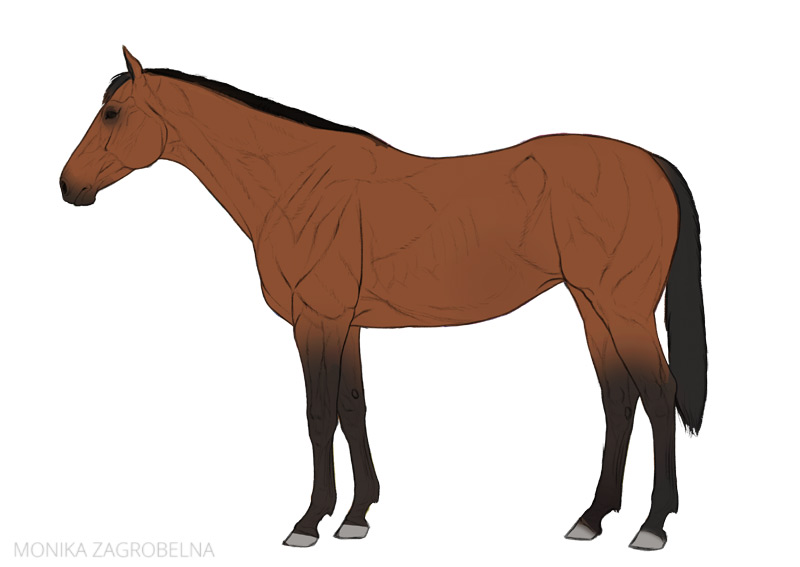
So how to modify information technology to something more than similar this?
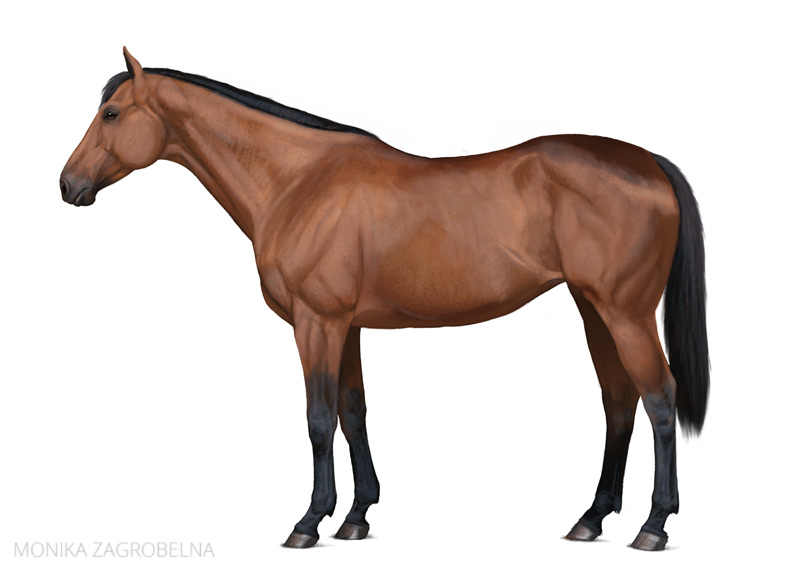
one. Colors
First affair you need to pay attention to are the colors. Organic things are rarely uniform in colour—even if a horse looks brown from a altitude, if you look closely, you'll notice patches of unlike shades. As well, the transition between the colors shouldn't be too smooth—the texture of the surface should disturb it.
Pay attention to the skin folds likewise—they're oft darker than the rest of the skin. Attempt not to spend too much time on details, and paint with large, rough, textured brushes. Information technology's good to "sprinkle" the whole surface with a scatter brush too, to make it expect less smooth fifty-fifty if it seems to have but 1 color.
One more than matter: keep the line art and the colors on separate layers—this will allow you to plow the lines off.
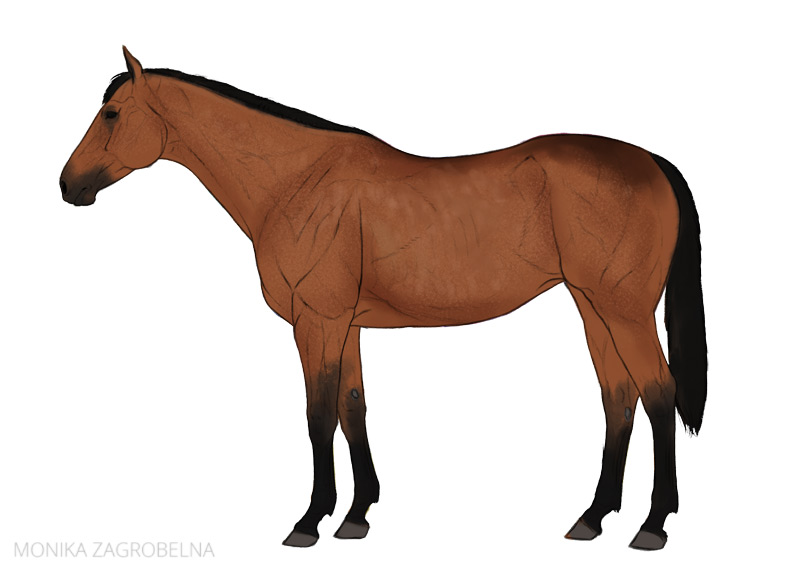
2. Shadows
Analyzing the shape of the shadows is ane of the means our brains use to recognize something every bit 3D. And then calculation proper shading will keep your drawing from looking flat. To shade the cartoon, duplicate the color layer and fill information technology with white. Then change its Blend Mode to Multiply. Everything y'all paint on this new layer volition darken the colors below!
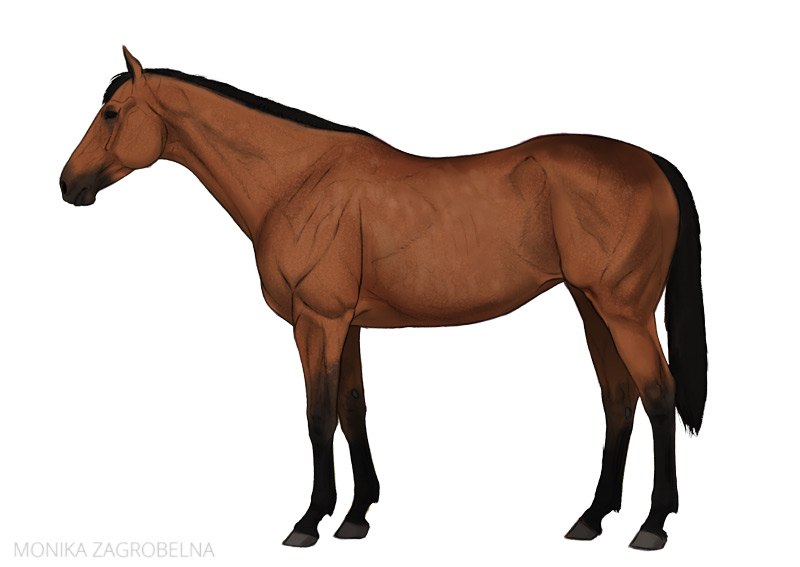
Here you tin can see what my shadow layer looks similar in Normal style. Observe that the shadows are non very night, and that they accentuate the 3D form of the body. Remember that it's not the presence of the shadows lonely that makes the object look 3D—it'due south the shape of these shadows. If you lot desire to learn about painting shadows, check out this article near shading.
But even if yous know how to shade, it may exist difficult if you don't know what you're supposed to shade. For example, shading a horse like this requires some anatomy knowledge. Here are a couple of handy anatomy diagrams if you're not familiar with information technology!
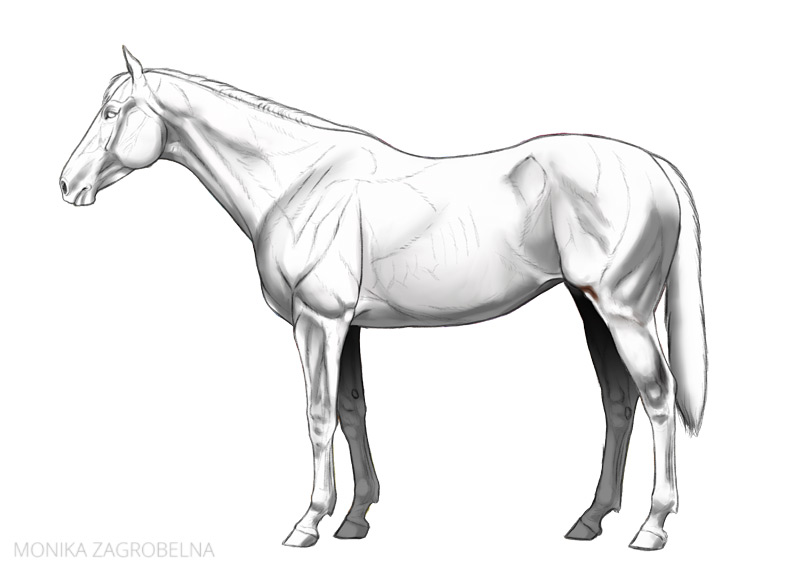
3. Shine
If you desire to accentuate the course of the illuminated role of the surface, information technology's good to add at least subtle shine. To do this, indistinguishable your shadow layer and fill up information technology with blackness. Alter the Blend Mode to Screen this time. Everything you paint on this layer will burnish the colors below!
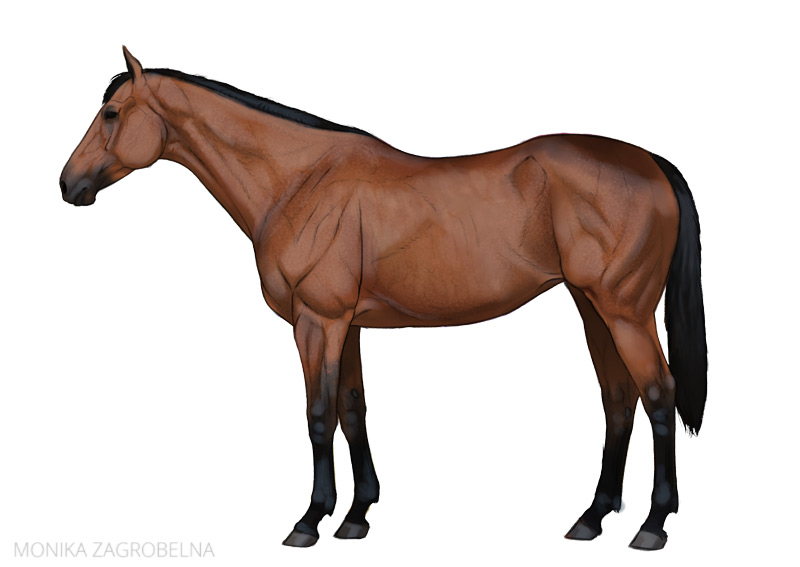
Here's what my polish layer looks like in the Normal mode. It's good to pigment a strong shine first, and then lower the Opacity of the layer to make the effect more natural.
Caution: shine should follow the texture of the surface. If your subject is fluffy, for example, the shine should appear on the tufts of hair, and non between them. Here'southward a good explanation for how to paint shine on fur.
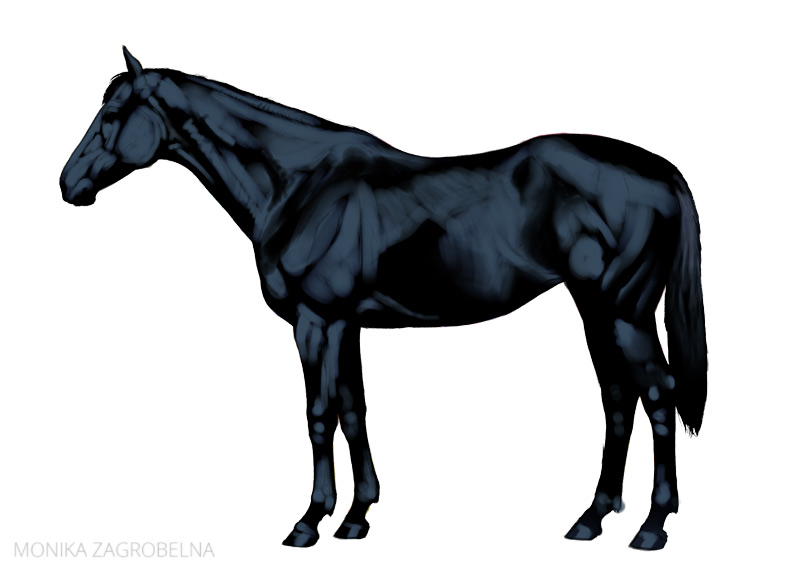
4. Highlights
There may be certain areas in your subject that are extra glossy—similar eyes, or metallic parts. To make them more shiny, add together another Screen layer and paint some actress shine. Use a bright color, but make the strokes smaller than previously. The smaller you lot brand it, the glossier the surface will look.
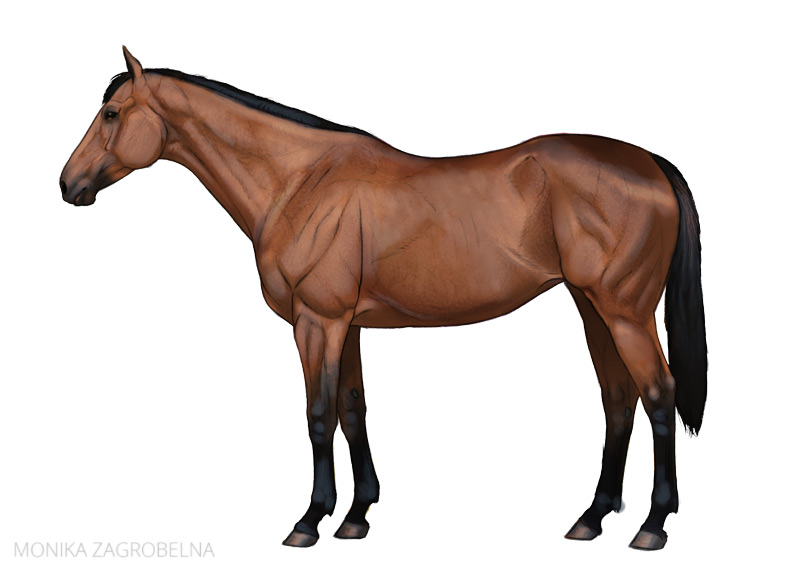
And here's what it looks like in the Normal mode. Notice that the highlights take much less space than the shine.
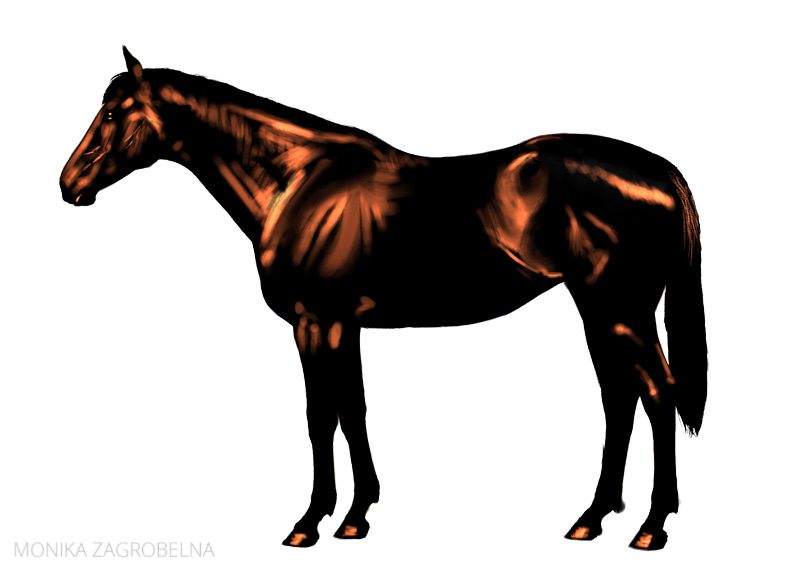
five. Remove the Lines
If you hide the lines now, you should observe that your drawing looks very much like a painting! It's an unfinished painting, of course, but information technology'due south no longer as dependent on the lines as it was earlier.
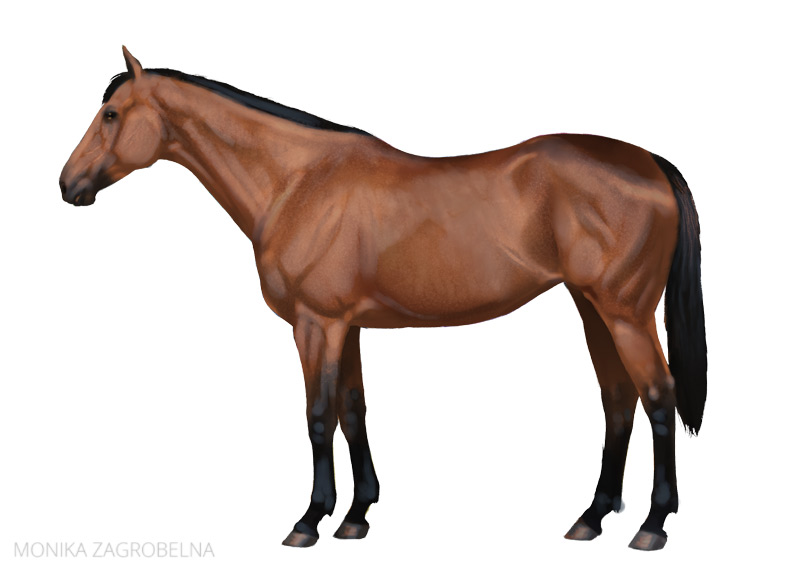
You could remove the lines now, but it'south better to use them for your benefit—lower the Opacity of the line fine art until it fits the darkness of the shadows. So accept a soft eraser and remove the lines from the parts that look skilful without them.
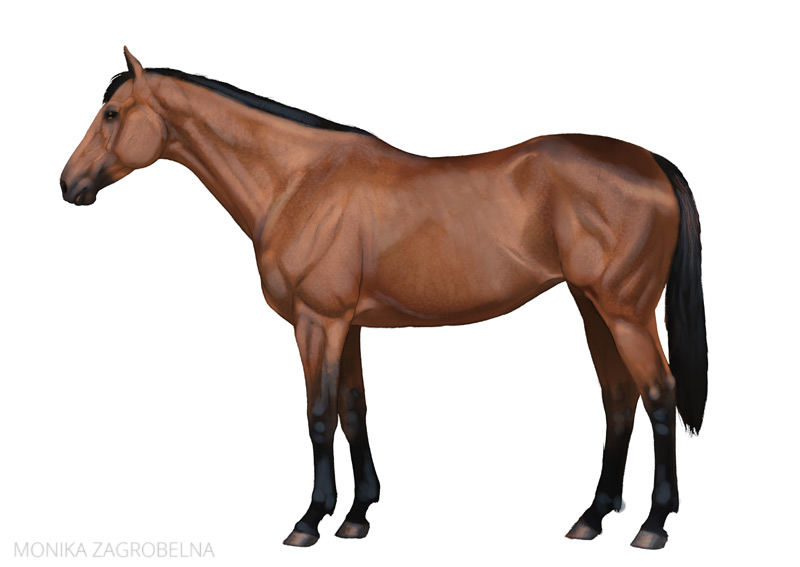
half-dozen. The Details
Now you lot can merge all the layers, zoom in, make your brush smaller, and commencement working on the details. This stage is less important than it seems—it's a cherry-red on top, simply if you lot followed the previous steps properly, your painting should look good even without any more details.
In fact, it's all a affair of the style yous're going for. If you desire to make the painting photograph-realistic, you may need to spend a few extra hours on this, roofing the lines, making the shine more than detailed, and painting over the hard transitions between shades. Merely if y'all simply want to show a concept, then a few extra details may exist all you need!
Conclusion
To plough a cartoon into a painting, you simply need a couple of ingredients:
- Non-uniform colors
- Form-accentuating shadows
- Grade-accentuating shine
- A pinch of highlights
- Non-compatible line art
This method volition work for every type of lineless art, not only realism. And keep in mind that all the methods I present are merely a proposition—feel free to take what y'all demand from them and reject the residual, for the benefit of your own, personal style!

Source: https://monikazagrobelna.com/2021/07/11/how-to-turn-a-drawing-into-a-painting/
Posted by: levinenes1943.blogspot.com
0 Response to "how to turn a paper drawing into digital art"
Post a Comment